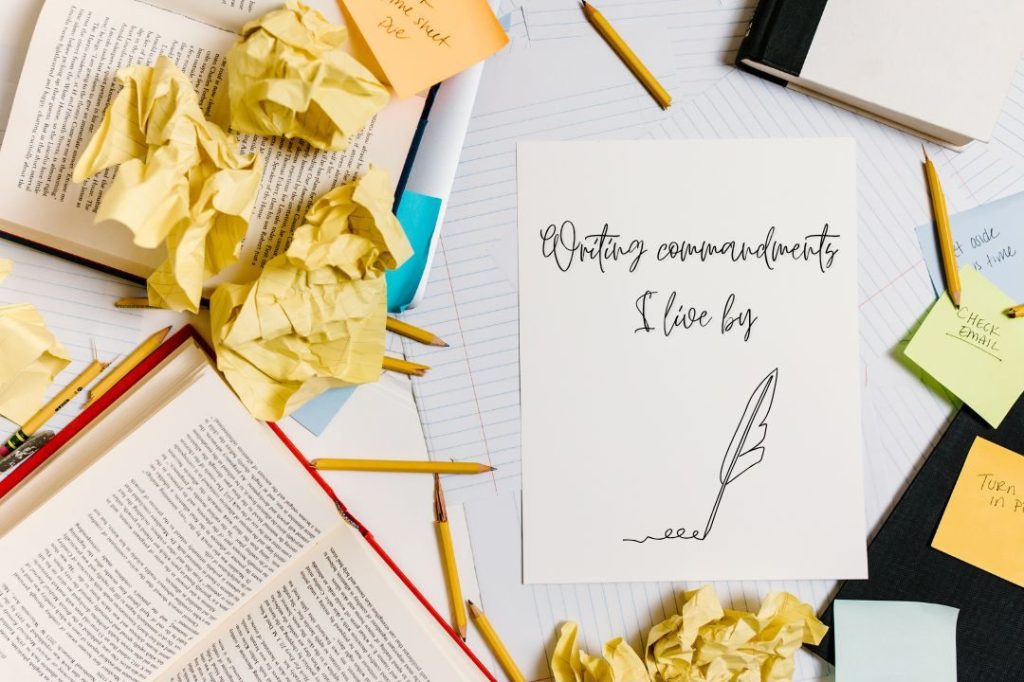
For years, I’ve tried to write the “right” way: to outline, to have a consistent routine, to imagine my perfect reader. But none of that worked for me. So, now I stick to these three commandments.
1. Write like no one’s watching.
Some people find it helpful to imagine their reader while drafting. I find it paralyzing. The moment I start thinking about someone else’s eyes on my words, my writing feels dumb, cringe, and way too messy.
The only way I can silence the inner critic is by repeating to myself: “No one has to read this.”
Because it’s true. No one will read my first draft until I decide it’s ready. But I can’t revise a blank page, so words need to be vomited first, no matter how awful, before I can make them somewhat good. But even then, my ideal reader is myself and I only need to make myself proud.
2. Burn that bridge when you get to it.
When I was younger, I gave up on so many stories because I didn’t know where they were going. I thought I had to have the entire plot figured out before I started getting the words down. As a result, nothing ever got written.
Then I wrote Galaxy Grifter. I had no clue what it would be about and no plans beyond the next scene. That minimised the pressure to zero, and before I knew it, I had written 80K words. I was then able to revise and turn it into a coherent story.
With the sequel, I had a clearer vision, because I already knew the world and the characters. Still, there were plenty of major plot points I couldn’t figure out in the planning phase—no matter how hard I tried. I’ve chased my characters up a tree and had no idea how to get them down again. But they have a remarkable will to survive. So, I’ve let them lead the way and they didn’t disappoint.
My great grandmother used to say one’s appetite arrives during the meal. I feel it’s the same with novels, where plot ideas arrive at the time of writing them… Even if it requires a little head-banging against the keyboard.
I guess, what I’m trying to say is… don’t dive up on good ideas just because you don’t know how to pull them off yet. Start writing and maybe something will happen.
3. Persistence over consistency.
Writing advice loves to preach consistency—write every day, hit a word count, build a routine. Which might work if you’re a creature of habit. I’m a creature of chaos.
When I was writing my first book, I had too much on my plate to write every day. Some months, I didn’t write at all. After trying and failing, and trying and failing to build routine or consistency, I decided to cut myself slack and embraced what I call “opportunistic writing”—writing when I can, without guilt, whether it’s been a week, a month, or a year.
Even now, writing on a deadline, my output is wildly inconsistent. I’ll write nothing for weeks, then vomit out a few thousand words in a day. And that’s fine. Things almost always take longer than I would want them to but–be it my day job, education, or whatever– I’ve never not delivered.
Final Thoughts
There’s no one right way to write and it can take years to figure out your process. But if you’re tired of traditional advice that preaches consistency, structure and intentional choices, maybe these three commandments will help to alleviate some pressure. Like they did for me.
Happy writing!
 A. ZAYKOVA