
As some of you may know, I’m neurodivergent with autoimmune chronic illnesses and I think science fiction—a genre that is meant to be forward-looking—could really shine with disability representation, and explore how things like accessibility and ethics are handled in worlds with advanced science. Yet it feels like it seldom does.
And by representation, I don’t mean that disability should be the focus of every story. Not every character needs to belong to a minority group (especially when the author doesn’t). But casual representation matters. It’s okay if it’s minor: an unnamed character, a passing mention. What casual representation does, is it acknowledges that different kinds of people exist in the world of the book and normalises their existence. As simple as that.
I certainly wasn’t interested in writing about my conditions in Galaxy Grifter (although some things may have leaked through). Still, the book mentions several disabled side characters:
🪐 Blackbeard, a mafia enforcer with a bionic arm (more on how he lost it in book two);
🪐 Halkeeth, Vera’s alien workmate; and
🪐 Bulletproof Bao, a pirate captain — both of whom use wheelchairs hoverchairs (much future, so sci-fi).
But enough about me. Here are some sci-fi books where characters with disabilities DO have the spotlight.
Cinder
YA Sci-Fi by Marissa Meyer
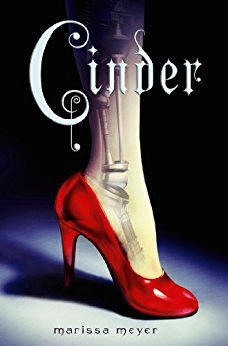
In this sci-fi Cinderella retelling, 17-year-old Cinder has artificial limbs and body parts. She’s a talented mechanic, but faces both discrimination and internalized bias as a cyborg.
The Aurora Cycle trilogy
YA space opera by Amie Kaufman and Jay Kristoff
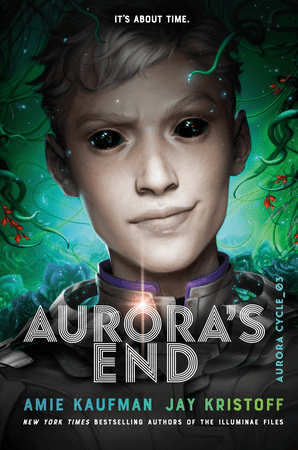
This YA space opera trilogy follows a crew of cadets on a romp through the galaxy, as they navigate alien threats and warmongering factions. Finian de Seel, the crew’s sarcastic, bisexual engineer, has nerve damage, muscle weakness, and impaired mobility after surviving a fictional plague. He wears an exosuit to help him move and is probably the most fun of all the main characters and is featured on the cover of the third and final book of the series.
The Long Way to a Small, Angry Planet
Adult space opera by Becky Chambers
One of the Wayfarer’s crew members, Jenks, is unusually short and appears to have some form of dwarfism. It’s revealed that Jenks’ mother birthed him in a “Survivalist” community with no access to genetic screening and later refused to tweak his genes for reasons other than health. Jenks has a kindly and mischievous personality and is romantically attached the to the spaceship’s AI.
Bubbles in Space series
Adult cyberpunk by S.C. Jensen

Starting with Tropical Punch, this cyberpunk series follows Bubbles Marlow — a former cop and current snarky disaster of a private eye. She solves crimes in HoloCity and beyond, confronting religious cults, shady corporations, and her own past. After losing her arm in an accident, she uses a cybernetic replacement. She also battles PTSD while staying sober and trying to rebuild her life and relationships.
The Weaving Spider & Moth
Adult near-future sci-fi by Dal Cecil Runo
This dark and literary near-future sci-fi follows Annie, a blind girl with parapsychological abilities, trapped in a neglectful household in South America, and Tibor, a boy who lives on a secret space station where he’s being trained as an assassin. The two connect via lucid dreaming. This title clearly stands out as an “own voices” story, with Annie’s character drawing on the author’s lived experience.
The Dream Master
Adult Sci-fi by Roger Zelazny
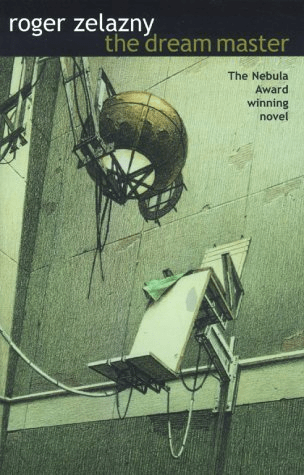
Eileen Shallot is a blind psychiatrist who wants to train in a branch of psychology engineering dreams and enlists the help of an established shaper Charles Render, who reluctantly agrees. Eileen has ulterior motives. Charles has wonky ethics. The experiment goes exactly as well as you can imagine. The book comes with some problematic language of the time, but ultimately is an interesting concept that doesn’t reduce the disabled MC to a stereotype.
Left Field Shout-Out
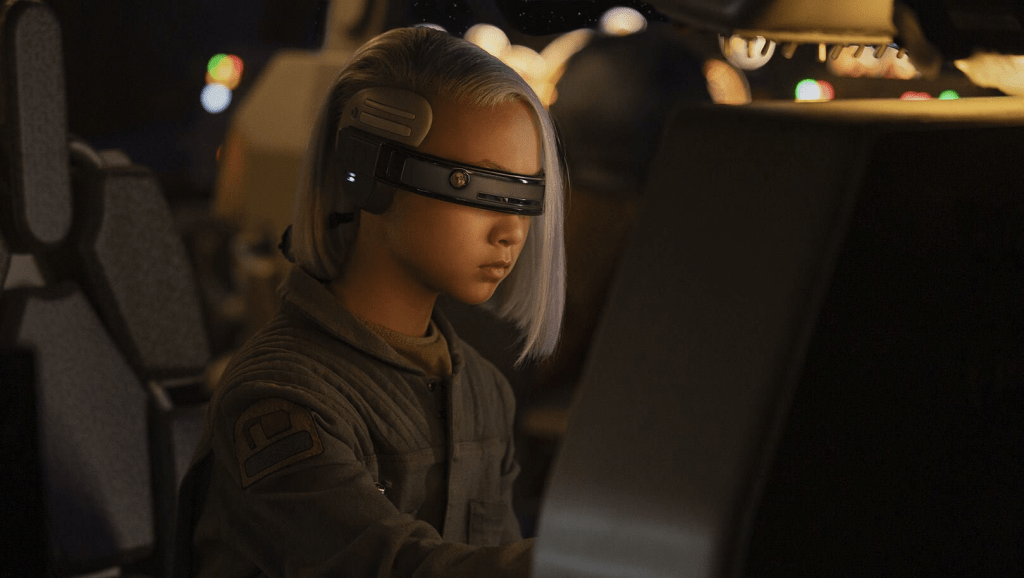
Not a book, but a welcome surprise, Episode 6 of the Star Wars series Skeleton Crew focuses on one of the child characters, KB, and her hidden disability. It’s revealed that KB has an implant at the base of her neck following an unspecified accident. The implant requires regular maintenance, and when it is corroded due to steam exposure on a hostile planet, it leaves KB immobile and threatens to kill her. The crisis is ultimately resolved, but it serves as a lesson for her more privileged friends, especially Fern, who is forced to reckon with the fact that people have different levels of ability. I watched the episode with my 8-year-old, and the topic was handled in an interesting and accessible way for kids.
What are your favourite sci-fi books with disability rep?
 A. ZAYKOVA