Last week I finally watched Project Hail Mary, leaving the cinema with a vague “I liked it. I think.” This week, I finally managed to articulate my thoughts.
I usually try to manage my expectations before watching an adaptation, but I loved the book so much I was almost crying at the prospect of reliving the story (also, I don’t leave the house much, so I think I was just hyped for a trip to the movies).
The first part made me want to hope the international scientific community could come together in a crisis like this. Astrophage also made me think of Dr. Manhattan for some reason (Watchmen 2009) and that Dr. Manhattan would probably judge the f*ck out of our geopolitics right now. And maybe we could use a little Dr. Manhattan. Or common sense. Though the latter is rare.
I also wondered how excited Gosling must’ve been for this role, because if I was an actor I’d be very excited.
Nerding out
First things first: the acting was amaze. And my laughter echoed through the emptyish cinema many times. Ryan fully embodied Ryland (I expected nothing less), and Eva Stratt was on point. And I NEED a Rocky figurine for my nerd shelf. Amaze! Amaze! Amaze!
I also need all of Ryland’s T-shirts, especially this one:
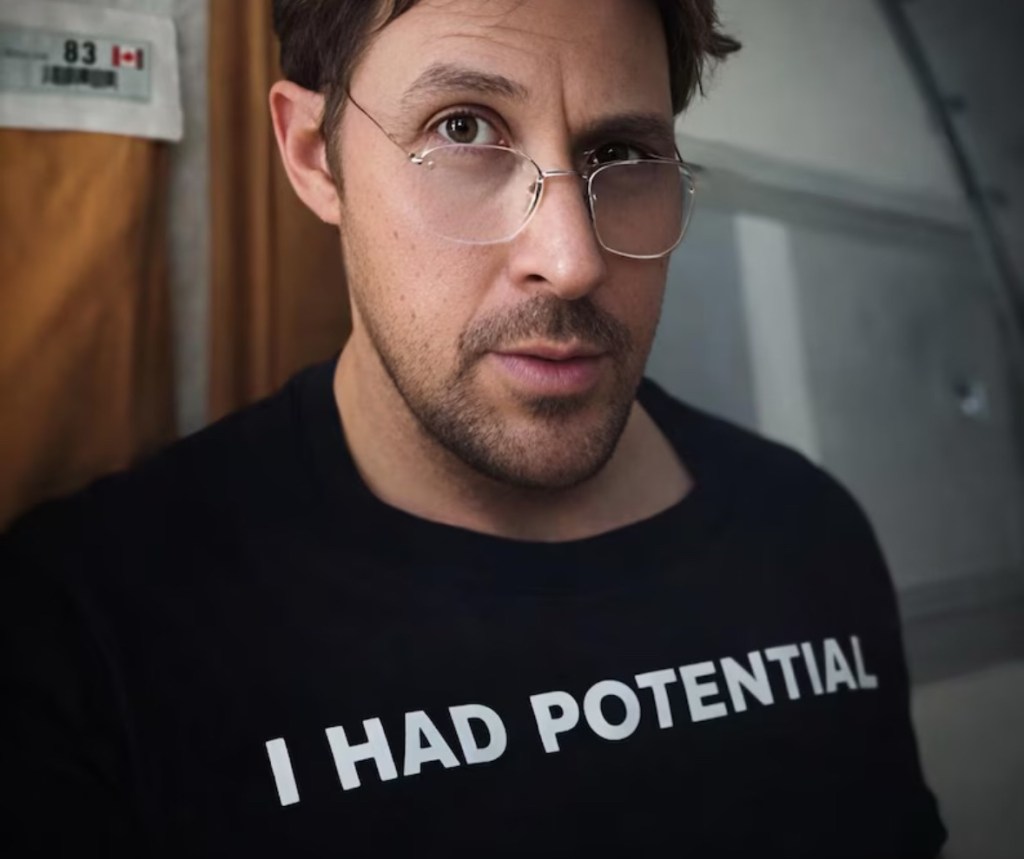
And his Fox cardi…

The reader’s curse
Because I studied Media at uni and not English Lit, I can appreciate the challenges of adaptation and try to view the book and movie as two independent pieces of art. And I hate being the “the book was better” person! 🫣
And yet… about halfway through the film I noticed I was relying on my memory of the book to continue making sense of the plot. The book includes a lot of scientific descriptions, processes, and rationalizations, written in an extremely entertaining manner. You’re basically solving science puzzles alongside Ryland and the logic seems foolproof (or at least I’m not smart enough to argue with it). I wouldn’t ask for the same level of detail in a space opera or a fantasy work. But in hard sci-fi, they are what makes the plot tick; they make both the world and the plot feel very plausible.
However, those details are extremely difficult to translate into a cinematic format. The director has less space to convince the viewers that this stuff makes sense. You’re told the astrophage eats the sun and taumoeba eats astrophage, but you miss out on the rigorous steps Ryland took to arrive at these conclusions, and so the film required more suspension of disbelief. I felt I couldn’t quite wrap my head around some parts and it made me want to reread the book to have the plot re-explained to me.
Also, I don’t know think Weir’s protagonists are supposed to be super sympathetic… but I felt the film tried a tad too hard with Ryland… Not with Rocky though. Rocky is perfect and lovable.
The non-reader’s take
My husband, who hasn’t read the book, found the plot “too simplistic.” At one point he asked: “Wait, did they say they replicated the conditions of Venus with tape and cardboard boxes?”
He felt it was on the opposite spectrum to Interstellar, as far as hard sci-fi goes. Where Interstellar tried too hard to be “smart,” PHM relied too heavily on the “warm and fuzzies.” It’s a bummer because the book nails that balance perfectly, and now I’m afraid I’ll never convince him to read it!
The Weir paradox
It’s funny, because I had the opposite experience with The Martian. I watched the movie first and decided the book would be too dry for me. Then I read Artemis and was blown away by Weir’s prose, humor, and internal monologue. It made me totally reconsider my stance, and PHM cemented him as one of my favorite authors.
Conclusion
Nonetheless, it’s still a solid watch. Come for the “power of inter-species friendship > apocalypse” vibe, stay for the puns. But if you want the version that’s as smart as it is cutesy, you must grab the book. Or audiobook. Because it’s is top notch.
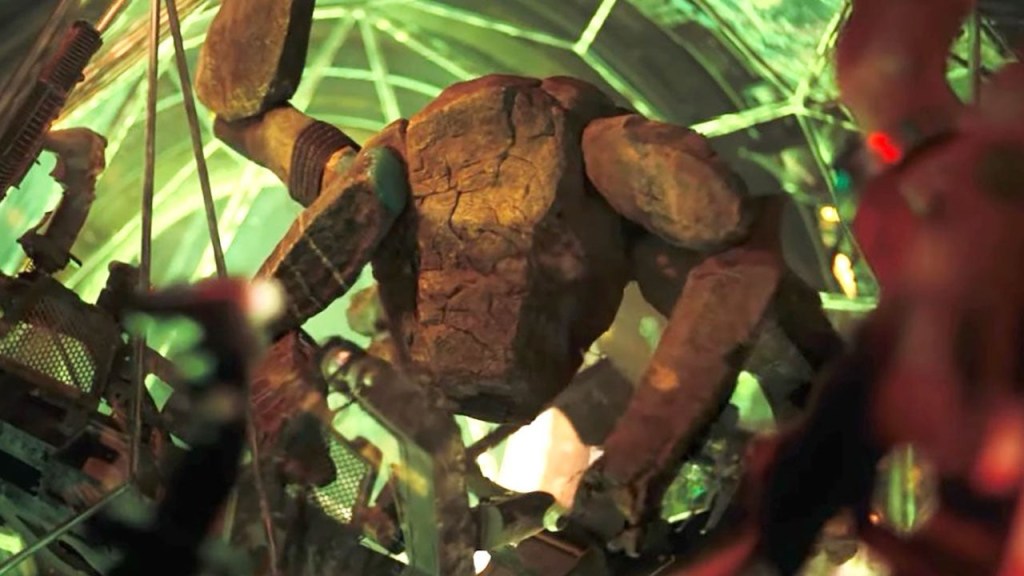
If you watched or read PHM, I’d love to know what you thought!
If you’re after more sci-fi book recs, check out this post:
 A. ZAYKOVA